
Your photographer walks through the house and captures the kitchen, living room, bedrooms, bathrooms, and exterior. These real estate listing photos are the foundation for an appealing gallery.
But should they also photograph the linen closet? The water heater? The attic access? What about the small laundry closet in the hallway? Which real estate listing photos are most relevant to a gallery?
There are very few spaces I would automatically exclude from a real estate listing. Buyers need to understand what the property offers, and something that seems unimportant to one person may matter to another.
Still, some spaces don’t need their own photo.
A listing gallery should give buyers a reason to consider the property and enough information to understand it. Photographing every door, fixture, and storage compartment doesn’t necessarily accomplish that.
Here’s where I would draw the line.
1. Ordinary Reach-In Closets Don’t Each Need a Photo
A standard bedroom closet with a shelf and hanging rod usually doesn’t deserve a separate image.

Buyers need to know the room has storage. But opening every closet and photographing essentially the same thing adds very little to the gallery.
If the closet is visible in a bedroom photo, that may provide enough context. A floor plan also shows its location when closets are included.

The exception is storage that gives buyers something worth noticing.
A large walk-in closet, custom organization system, unusually deep closet, or substantial pantry may deserve its own coverage. Those spaces provide information buyers won’t necessarily get from the main room photo.
Ask what the separate image would explain.
If the answer is simply, “There’s a closet,” I would usually leave it out. If the answer is, “There’s considerably more storage than buyers would expect,” photograph it.
When it comes to real estate listing photos, you want to capture the most relevant spaces that help buyers understand the space, not add more noise.
2. A Laundry Closet May Not Need a Separate Image
This is a controversial one, and it depends on how a hallway laundry closet is photographed.
There’s no argument that laundry facilities need to be in the photo gallery. But, many times you’ll see photos of laundry closets themselves without much context as to where they are in the house.

Buyers need to know where the laundry is located in relation to the other rooms, whether it’s a hallway, the kitchen, or the living room.
So, ask your photographer to photograph the laundry closet along with a feature around it like the living room or kitchen. Sometimes, the washer and dryer are so secluded that there isn’t much to capture. But for those that are near an important room, capture the laundry as it relates to the rest of the room instead of simply photographing the laundry closet.
Remember, laundry closet real estate listing photos should explain something useful about its location or arrangement. Try and incorporate it into another space to provide context.
3. Utility Equipment Usually Belongs in Property Information-Not in a Photo
A close-up of a water heater rarely earns a place in the main listing gallery.
The same applies to ordinary electrical panels, furnace equipment, and other mechanical components.
Buyers may care about the equipment’s age, type, or condition. But a photo of the unit often doesn’t answer those questions clearly.
Provide the relevant information through the appropriate property materials and conversations. Don’t expect buyers to zoom in on an equipment label to figure out what the home offers.
There are exceptions.
A dedicated mechanical room may be useful to show if its layout matters like in a commercial space. A distinctive system may warrant documentation for interested buyers. An investor may request equipment photos as part of evaluating a property.
That is a reason to capture those real estate listing photos, but it doesn’t automatically make them useful marketing images in a gallery.
Tell your photographer whether you need listing photos, documentation, or both. Those are different purposes.
4. Unfinished Attics and Crawl Spaces Usually Don’t Belong in the Gallery
I wouldn’t include routine crawl-space photos in a residential listing gallery.
An attic hatch, insulation, ductwork, or the underside of the house generally doesn’t explain the home in a way that belongs alongside the kitchen and bedrooms.
On the other hand…
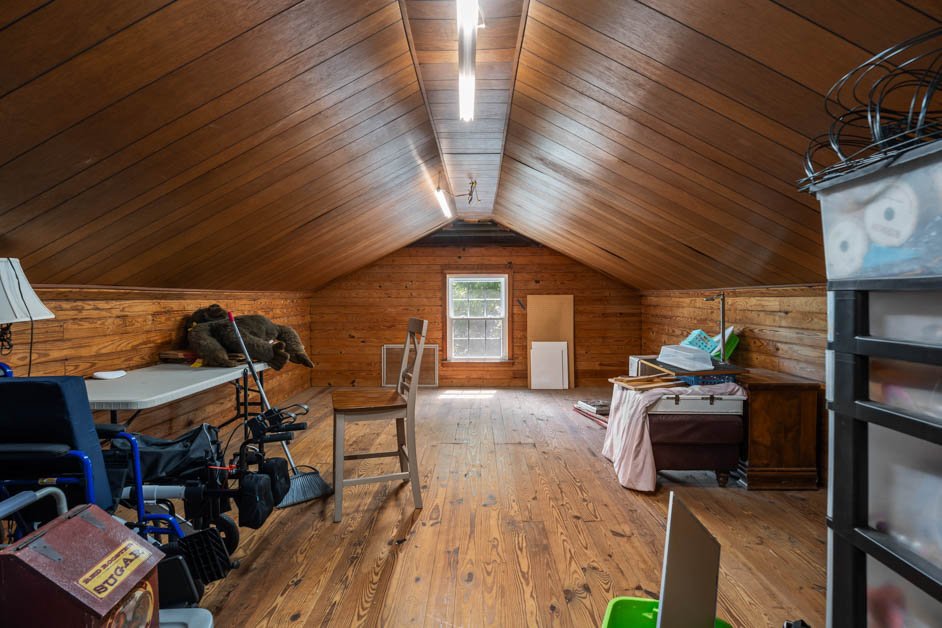
An accessible attic with substantial storage is a different conversation. If you’re advertising that storage, buyers should understand what it looks like and how it’s reached.

The same applies to unfinished space presented as a potential project. Show the existing space accurately and be clear about what it currently is.
Leaving a crawl-space image out of the gallery is a decision about useful coverage. It should never become a way to avoid discussing a known problem.
5. Small, Ordinary Spaces Don’t Always Need Their Own Image
These would be like hallways or transition spaces between rooms
It’s implied that a hallway would be necessary to transition from place to place within a house. So, including them within the listing media isn’t terrible, but there’s probably another photo you can include instead.

Same goes for small powder rooms. There’s no argument that the powder rooms need at least one photo (preferably of the pedestal sink). However, how it’s photographed can either provide good information to a buyer or mediocre information.
How the bathroom is photographed either provides a little information or a lot of information for your buyer. Don’t settle for a detailed shot of the pedestal sink if you can avoid it.
Instead, seek out understanding of where the bathroom is in the house, and you’ll have more information to draw from.
6. A Room Doesn’t Need Every Possible Angle
Some real estate listing photos capture a space well but are dull, don’t add value, or aren’t necessary.
For example, a small secondary bedroom may be explained with two or three views. Additional angles of the same walls may add nothing. And, a photo of two plain walls is boring, doesn’t add value, and isn’t helpful in understanding the room.

A hallway needs coverage when it explains a connection. It doesn’t need three separate photos because the photographer walked through it three times.
This also applies to detail shots.
Original woodwork, distinctive tile, and a well-designed built-in may deserve closer attention in certain cases. Those images draw buyers toward features they might miss in a wide view.
BONUS TIP: Don’t Exclude a Space Because It Isn’t Ready
A cluttered garage may still be important. A messy workshop may be one of the property’s strongest features.
Preparation problems should prompt a conversation with the seller and photographer.

Clear the space where possible, agree on what needs to be shown, and discuss the available options. Don’t quietly omit a major feature because photographing it takes more effort.
Similarly, avoid excluding an important room just because its appearance is less appealing than the rest of the house. Buyers still need an accurate understanding of the property.
Give Each Photo a Reason to Be There
Before the appointment, tell your photographer which spaces deserve attention and why.
Then review the finished gallery with the same question:
What does this photo give buyers that they haven’t already seen?
Some images explain layout. Others show useful storage, distinctive features, or the character of the home.
A routine closet, equipment close-up, or fourth angle of a small bedroom may do none of those things.
You don’t need to photograph everything separately to present the property thoroughly. You need coverage that shows what matters and makes the home easier to understand.
Which areas of a listing don’t require a photo? Let me know in the comments below!
Planning your next listing in Fayetteville or the surrounding area? Gray’s Creek Photography provides professional listing photography, floor plans, aerial imagery, and video. View our services and schedule your next shoot.
Need helpful resources? Click here for a photo-day prep checklist and our past newsletter editions.
Leave a Reply